Your first French train journey might feel unfamiliar, but you don’t need to understand the entire railway system. You need the right ticket, the right train and enough time to board.
I’ve taken many more train trips than I can list here, on TGV, OUIGO, TER and Eurostar—including Paris to Angers, Charles de Gaulle to Lyon and Paris to London. I love train travel, and a few simple habits make it much easier.
1. Buy your ticket and know what you booked
Should you book train tickets in France in advance or buy at the station?
Book long-distance trains ahead and buy most short regional trips on the day. The type of train is what matters. I’d book a TGV from Paris to Lyon once I knew my dates, but for a TER from Nice to Antibes, I’d usually buy my ticket that morning.
- Book in advance for TGV INOUI, OUIGO, Intercités with required reservations, and Eurostar. Cheaper fares can go first, so you’ll often pay more as your travel date approaches. Popular departures can sell out, especially on weekends, holidays, and in summer. Start checking about four months ahead for TGV INOUI and Intercités. Holiday tickets may be released in batches. OUIGO Grande Vitesse can go on sale two to nine months ahead, while OUIGO Train Classique within France opens 60 days ahead. Eurostar to or from London can open up to 10 or 11 months ahead, depending on the journey. SNCF ticket release dates · OUIGO booking windows · Eurostar booking windows
- Buy most short TER trips at the station or on your phone the same day. Most local TER trains have open seating, and standard fares on many routes stay the same on the day. A ticket can be available even when all the seats are taken. Some regional services have different fare or reservation rules, so check your train when you look up the route. TER tickets generally go on sale three to five months ahead, depending on the region. SNCF regional train guidance · SNCF ticket release dates
I use SNCF Connect and Trainline to book ahead, and I’ve bought regional tickets at station machines too. Apps make it easy to buy tickets, reserve seats where offered, and keep everything on your phone.
If you buy a paper ticket at a station machine, check whether it needs to be stamped before boarding. With a mobile ticket, have the barcode ready to scan if there’s a gate.
Before paying, check:
- The exact stations, departure date and time.
- The train type: TGV INOUI, OUIGO, TER or Eurostar.
- Luggage allowances and ticket conditions.
- Connections: I choose a direct train whenever practical. It’s one less thing to think about.
I’ve occasionally needed a VPN set to France to get SNCF Connect working on my phone. That’s my experience, rather than something everyone needs; having another booking option helps.
For comparisons between services, tickets and reservations, see my France by Train guide.
2. Check the arrival instructions—especially for Eurostar
We usually arrive about 15–20 minutes early for familiar domestic journeys. For your first trip through an unfamiliar station, give yourself more breathing room.
SNCF advises arriving 20 minutes before TGV, Intercités and TER departures, and 30 minutes before OUIGO. Always follow your ticket’s instructions. SNCF boarding guidance
My expensive lesson: On our first Eurostar journey to London, we arrived our usual 20 minutes early. We were too late and had to buy new tickets. That was entirely my mistake!
London journeys involve security and border checks. Check Eurostar’s recommended arrival time for your station and ticket class—the departure time is not your check-in deadline. Eurostar arrival guidance
3. Find your train on the departure board
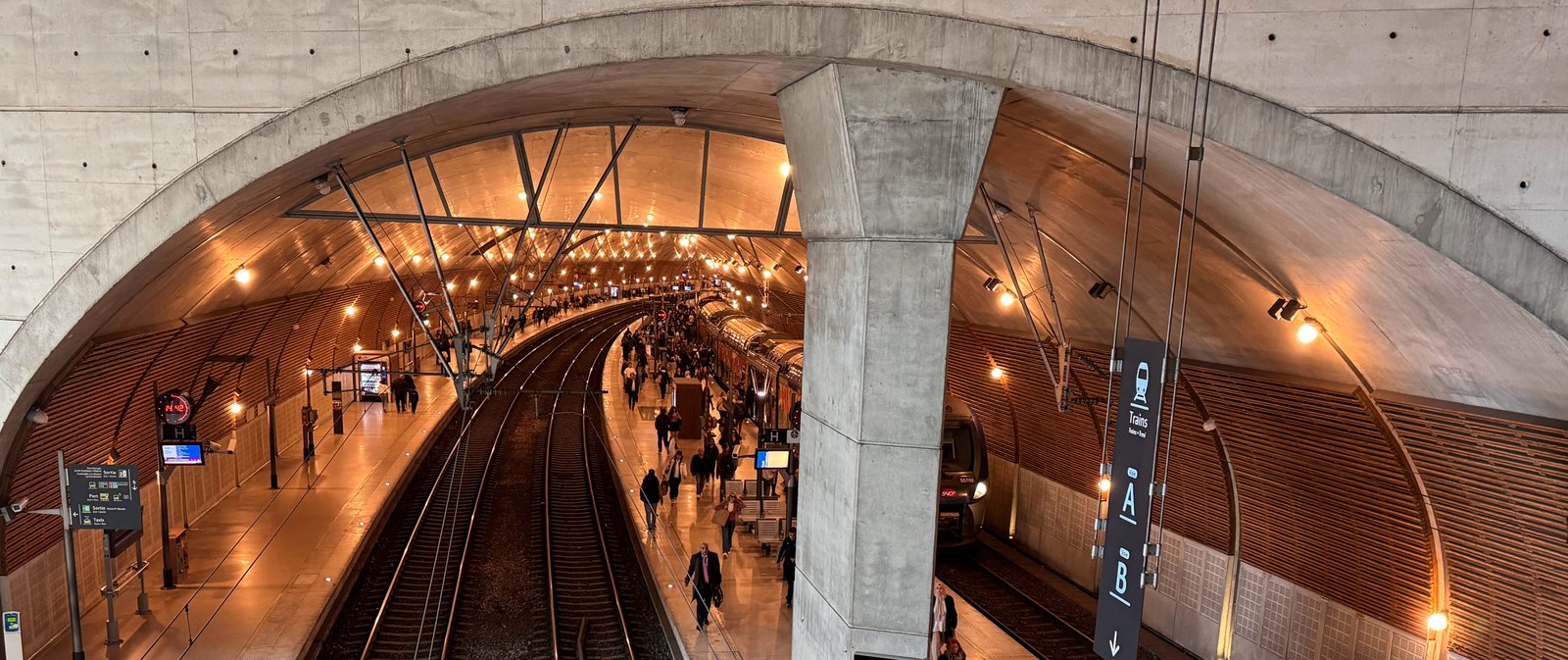
Look for Départs, meaning departures. Then match the board to your ticket:
- Train number: Your most useful identifier.
- Heure: Departure time, usually in the 24-hour format. 18:34 means 6:34 p.m.
- Destination: Often the train’s final stop. Your destination may be along the way.
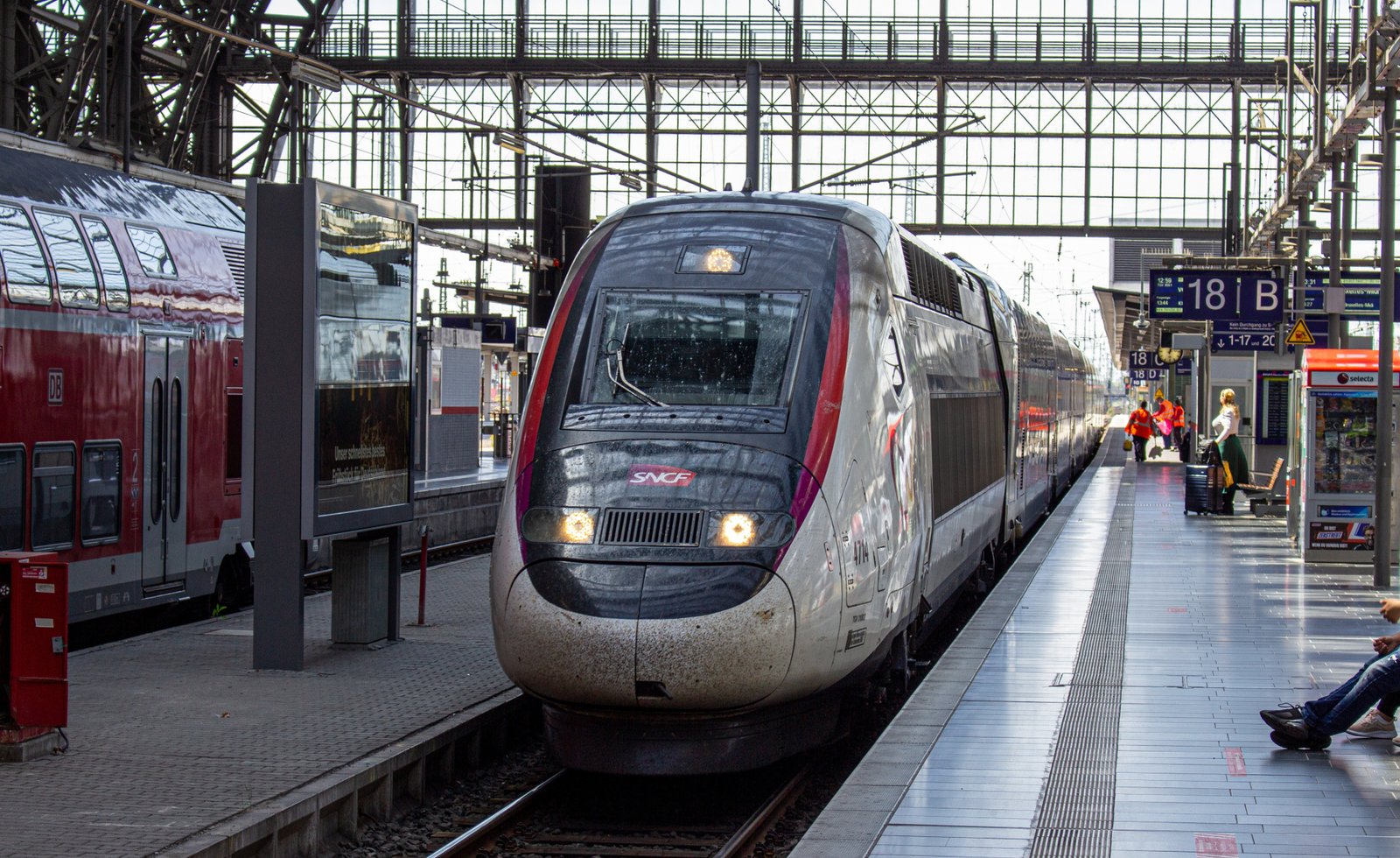
- Voie: The track or platform number—or sometimes a letter.
No platform showing yet? Keep checking. It may appear closer to departure. Once posted, follow the signs and have your ticket ready for any platform gates.
If you’re unsure, ask station staff when available. Start with “Bonjour” before your question. La politesse matters in France, and a friendly greeting goes a long way.
4. Find your carriage and get settled
If your ticket lists a voiture and place, those are your carriage and seat numbers.
On some platforms, a train-composition display shows roughly where each carriage will stop. It’s helpful when available, but don’t worry if your station doesn’t have one. Regional TER boarding can be simpler; follow the seating instructions for your particular ticket.
Keep your ticket accessible offline. Download it in the app or save the supplied PDF. I also take a screenshot as a backup when the ticket format allows it. Keep your phone charged and carry the required identification.
My ticket-machine tip: Some older machines use a dial you turn to select an option, then press to confirm. I once helped several groups work that out in Nice. Once you know, it’s easy. Until then… less so!
5. Bring luggage you can manage yourself
We usually travel with a suitcase and a carry-on, but check your train’s allowance before packing. Different services have different rules.
- Label your bags. TGV INOUI requires your name and mobile number.
- Be ready to lift and move your own luggage.
- Use overhead storage when your bag fits safely.
- Keep valuables, medication and documents with you.
I prefer keeping my suitcase overhead when it fits. If it needs a larger luggage rack, I’m more comfortable sitting nearby. Keep aisles and doors clear. TGV INOUI luggage guidance
6. Relax and enjoy the ride
My favorite part? On trains with a café-bar, I love getting a glass of wine and watching the countryside go by. Not every service has one, so bring water and a snack if you’ll want them.
Keep track of your approaching stop and allow time to gather your things.
You don’t need to know everything before your first journey. Know your train, check the board, follow the boarding instructions and ask when you need help. Then settle in. Trains are fun.
Planning your route? Use my France by Train guide for practical reference notes on tickets, luggage, connections and stations.
Keep your planning moving.
See the Train GuideThis is general planning information. Routes, fares and policies can change; check official sources for your travel dates.