Normandy can be a trip about cliff walks, harbor towns and gardens, a trip through D-Day history, or a little of both. The easiest way to start is to decide what you’d most like to see. Use the map below to get your bearings, then jump to the places that interest you for a sense of what’s there, how long to allow and how to get there. Once you have a shortlist, use the route suggestions at the end to put the pieces together.
Use the map for orientation and match its numbers to the list below. Train times depend on your destination and connections. Check a timetable for the full journey, including the last stretch from the station.
1. Mont Saint-Michel Abbey
Go for the abbey, medieval village and wide views over the bay. The abbey crowns a tidal island near the Brittany border. Inside, the church, cloister and long stone halls show how much was built onto such a small piece of rock. Outside, the ramparts and causeway give you two very different perspectives on the island. Leave time to look back at it from the mainland as well as to look out from the top.
Allow half a day at the Mont. The village is free to enter and the abbey requires its own ticket. Book ahead for busy dates and leave time between arrival at the mainland car park and abbey entry. The free Passeur shuttle covers much of the approach, but you still have the walk into the village and the climb to the abbey. Expect steep, uneven surfaces and many steps. If stairs are a concern, build your visit around the causeway views and whatever portion of the lower village works for you. Use a qualified guide for any walk out into the bay.
Getting there. Drivers use the mainland visitor parking. By rail, check the connection through Pontorson and the onward bus before buying. A same-day return from Paris makes for a long day with several moving parts. One night on or near the Mont gives you a chance to see it after the day visitors leave and to visit the abbey the next morning. Ask your lodging about parking, access and luggage before booking. Official abbey visitor information
2. Normandy American Cemetery and the D-Day beaches
Go for remembrance and a closer look at Omaha Beach. The cemetery occupies a bluff above Omaha Beach at Colleville-sur-Mer. Start at the visitor center for individual stories and background on the landings. Then allow time for the memorial, the Garden of the Missing and the overlook. The cemetery and the beach are separate stops. Use a public beach access point if you want to stand on the shore.
Allow 1½ to 2 hours for the cemetery, plus beach time. Check the American Battle Monuments Commission’s operational notices before setting out. Work can affect access to burial plots and paths while other parts of the site remain open. If you have limited walking time, ask staff which areas are accessible that day. The cemetery is a useful starting point for a first D-Day visit, especially if you leave time to see the landscape below it.
Getting there. Bayeux is a practical base. A car simplifies the short hops between coastal stops. Without one, confirm buses or arrange a taxi in both directions before committing to a route. For help choosing among the landing beaches, museums and memorials, read How to Visit the D-Day Beaches Without a Tour. Cemetery visitor information · Current ABMC access notices
3. Pointe du Hoc
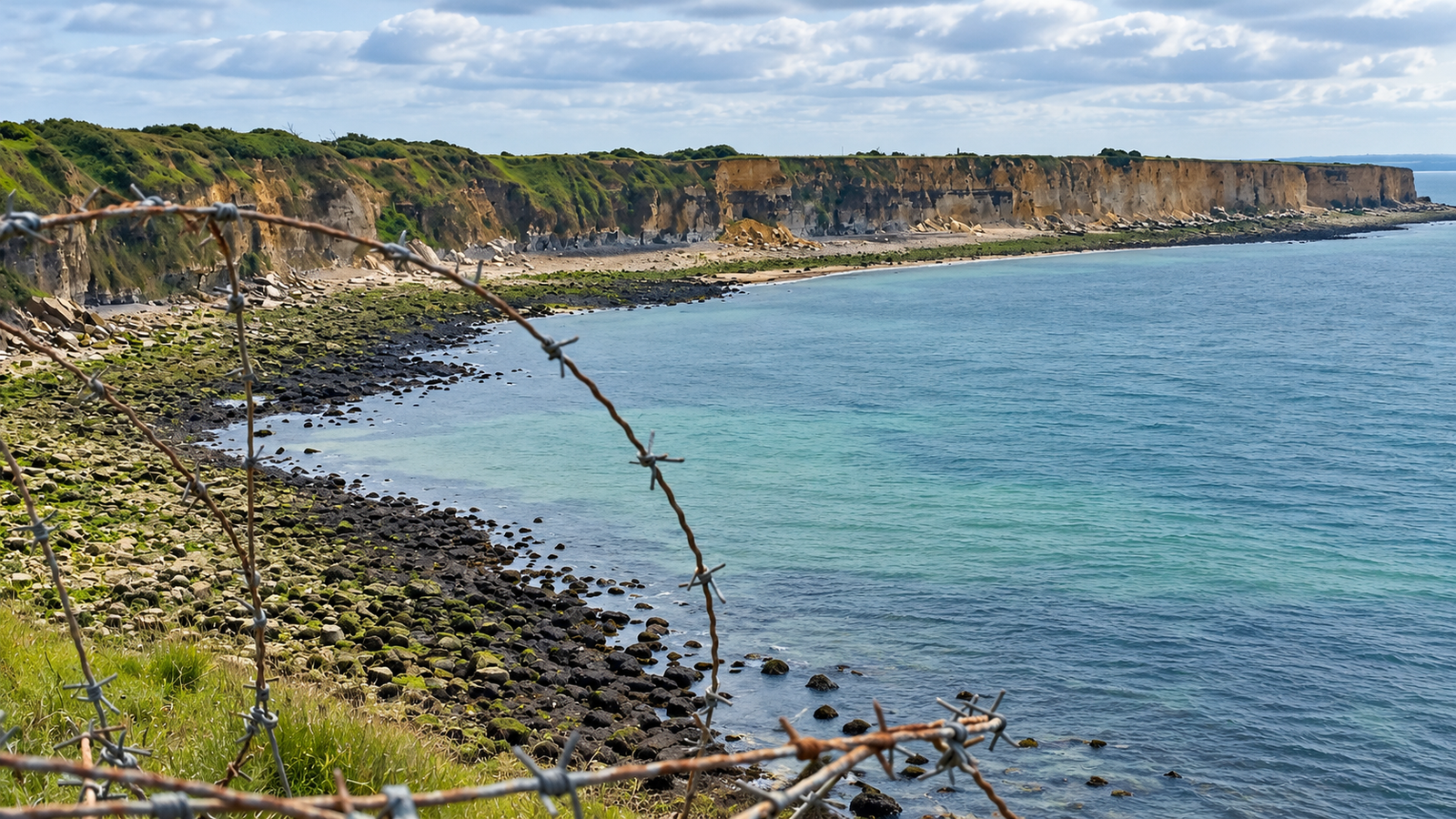
Go to see how the terrain shaped the D-Day assault. U.S. Army Rangers scaled these cliffs on June 6, 1944. Bomb craters and surviving German fortifications give the headland a different feel from the cemetery or the beach. Look out over the coast from whichever marked viewpoints are open. The landscape is the main exhibit here, so even a short visit benefits from some background on the Rangers’ objective.
Allow 45 to 75 minutes, depending on access. Restoration affects the monument, bunkers and some paths. Check the project notice before driving out, especially if a particular viewpoint or feature is your reason for going. This is an exposed outdoor stop with uneven ground. Wear shoes with grip, follow barriers and use open paths only. If conditions or closures make it a poor fit, give that time to Omaha Beach or a nearby indoor museum.
Getting there. Pair it with Omaha Beach and the American Cemetery from Bayeux. It works most easily by car. Without one, plan the return and any intermediate stops in advance with a local driver. Pointe du Hoc restoration and access
4. Étretat
Go for the chalk cliffs, sea arches and coastal walks. Start at the seafront so you can see the scale of the cliffs from below. The western Falaise d’Aval is the side to choose for the classic arch and needle. The eastern Falaise d’Amont looks back over the village and the bay. One side and a walk along the waterfront are enough for a satisfying first visit. If climbing is difficult, stay around the promenade for views from sea level.
Allow half a day, or most of a day for both sides and lunch. Wear shoes with traction and bring a wind layer. Stay on marked paths well back from cliff edges, respect diversions, and keep clear of the base of the cliffs. Build some flexibility into your schedule for wind, rain or poor visibility. The waterfront is still worth seeing on a day when the upper paths are a poor choice.
Getting there. Drivers should use signed visitor parking and allow extra walking time on busy days. Without a car, check buses from Le Havre or Fécamp and work backward from the last useful departure. From Honfleur, driving across the Seine estuary is usually simpler than coordinating the bus connections. Give Étretat its own day if you want both cliff walks. Local access, parking and bus guidance
5. Giverny
Illustration inspired by Monet’s garden in Giverny.
Go for Monet’s house and two very different gardens. The flower beds near the house are full of color and texture. The water garden has the pond, bridge and reflections familiar from Monet’s paintings. Give both parts time, then walk through the village. If you want a fuller art day, check what’s on at the Musée des Impressionnismes Giverny, which has its own exhibitions and admission.
Allow 2 to 3 hours for the house and gardens. Check seasonal opening dates before booking transport, and consider an advance timed ticket. The grounds involve paths and the house has stairs, so check the venue’s accessibility information if you want to plan a step-free visit. Flowering varies across the season. Even if you have a favorite view in mind, allow time for what’s looking good on the day.
Getting there. Giverny is one of the easiest places on this list to visit separately from Paris. Take a train from Paris Saint-Lazare to Vernon–Giverny and connect by seasonal shuttle or a prearranged taxi. Build a cushion before your garden entry and check the return shuttle and train together. If you’re already doing it as a Paris day trip, you can start the rest of your Normandy route farther west. Monet’s house and gardens
6. Mémorial de Caen
Go for the wider story of the Second World War. The collection puts the landings and the Battle of Normandy in context, with archival material and objects covering the road to war, occupation and the fighting that followed D-Day. If you are interested in military history, this is worth a substantial stop. It also works as a lead-in to the beaches because the maps and exhibits make it easier to place individual coastal sites in the wider campaign.
Allow 2 to 3 hours for a focused visit. Set aside half a day or more if you read exhibits closely or want to add the Cold War galleries. Pick your priorities before entering so you still have time for the sections you came to see. This is also a good indoor option when coastal weather turns. Check tickets, closing days and the museum’s accessibility information on the official site.
Getting there. The museum is outside central Caen. Budget time from the railway station for a city transit connection or taxi. With a car, it can fit on the move between Honfleur and Bayeux if you give the museum most of that part of the day. Pairing it with the cemetery and Pointe du Hoc on the same day can feel rushed. Mémorial de Caen visitor information
7. Bayeux Tapestry
Go for the story of William the Conqueror and medieval Bayeux. The Bayeux Tapestry is an eleventh-century embroidered account of the events leading to the Norman conquest of England in 1066. Its scenes show ships, feasts and battlefield details as well as the main action. Bayeux itself is an appealing stop, with a cathedral, old streets and a riverside walk.
Check the museum closure before planning around the original. The Bayeux Tapestry Museum is closed for renovation, with reopening currently planned for October 2027. Check the official museum page for updates before booking around it. In the meantime, give Bayeux a half day for the cathedral and old town, or add the Battle of Normandy museum and the nearby Commonwealth war cemetery if those fit your interests.
Getting there. Bayeux is on the rail corridor from Paris Saint-Lazare through Caen. The old town is walkable from the station for many visitors. Check the walk with luggage when choosing your accommodation. If you’re staying for the beaches, confirm how you’ll get from town to each coastal stop. Bayeux Tapestry Museum reopening information
8. Honfleur
Go for the old harbor, lanes and a slower day by the water. Start at the Vieux Bassin, where tall narrow houses crowd around the harbor, then walk up to the timber church of Sainte-Catherine. Leave time to wander the galleries and side streets. If the weather turns, consider the Musée Eugène Boudin and check its opening days. The harbor and church make an easy short visit, with plenty to fill a longer stay if you like painting, architecture or waterfront meals.
Allow half a day for the center, or stay two nights to explore the coast. The harbor area is compact, with cobblestones and some sloping streets away from the waterfront. When comparing hotels, check the route from parking or the bus stop, particularly if you’ll be arriving with luggage. Early morning is a good time to see the harbor before the busiest part of the day.
Getting there. Honfleur has no passenger rail station. Check onward buses from Le Havre or another regional hub before buying your train, or use a car for easier day trips. Drivers heading to Étretat should include the estuary crossing and visitor parking in their plans. Honfleur works particularly well if you want evenings in a harbor town and a separate day for the cliffs.
How to put your Normandy trip together
Start in eastern Normandy. Treat Giverny as a separate outing from Paris, or visit it on the way west if you have a car and the gardens are open. When traveling with luggage, check storage in advance before putting a museum visit between two train journeys.
Use Honfleur for the estuary and cliffs. Two nights give you time for Honfleur on arrival and a day for Étretat. If you have only one afternoon, choose a harbor visit or a cliff walk based on what you want most. If you’re relying on buses, plan your day around the return service first.
Use Bayeux for the beaches and central Normandy. Two nights give you a full day for the cemetery, Omaha Beach and Pointe du Hoc, with town time on either side. Visit the Mémorial de Caen on the transfer from Honfleur if it fits your transportation and luggage plans. If you want a full museum day or more than one beach sector, give Bayeux another night. Travelers who prefer scenery and villages can shorten this part of the route and spend more time around the estuary or the Mont.
Finish at Mont Saint-Michel. Give the Mont a night at the western end of the route. Mainland lodging can simplify parking and luggage. On-island lodging puts you in the village after most day visitors have left, but check how you’ll reach your hotel. If you’re going by train and bus, choose accommodation only after you’ve checked your arrival and next-day departure together.
A short checklist before you book
- Circle the places you would most regret missing. Give each its own realistic block of time.
- Check seasonal openings, restoration notices, tickets and the full door-to-door journey for those stops first.
- Choose your overnight bases around the days you actually want to spend, then check parking or last connections.
- Leave room to move a cliff walk to a clearer day. Keep an indoor option in mind, and look at your transfer days before adding extra stops.
- Write down the reservations you’ll need and leave yourself time for the places you find along the way.
What comes next
Once you’ve chosen your stops, the next decision is where to sleep and how to connect the days. I’m planning a separate guide to Normandy bases and a Normandy trip-planning workbook to help you compare towns, map out driving or train days, and keep track of reservations. For now, start a short list with three columns: where you want to go, where you’ll sleep, and what you need to book. It’s enough to start putting your trip together.
Keep your planning moving.
Plan Your Normandy TripThis is general planning information. Routes, fares and policies can change; check official sources for your travel dates.